We made the decision early on that renting a car was the only realistic way to see as much as possible on our wish list for our first time in Ireland. So with the exception of our time in Dublin, we logged 1,504 kilometers (close to 950 miles) across parts of eight days.
To be honest, I’d been a little nervous about the prospect leading up to our departure – however it turned out that self-doubt was unwarranted. Maybe it’s because I’m left-handed or have a couple of screws loose, but I absolutely loved [almost] every minute of it.
A few thoughts and observations in no particular order:
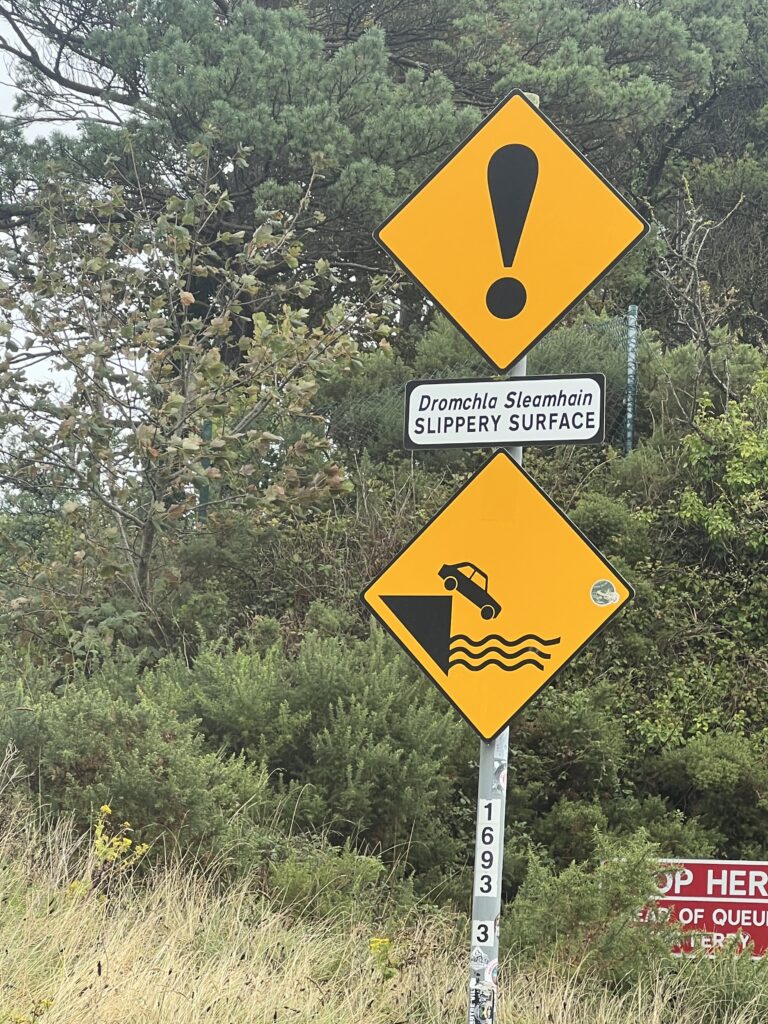
- Ireland has to be the undefeated champion in having absolutely the best road signs. “Go mall” became my wife’s favorite phrase whenever she felt like I was driving a wee bit too fast. A lot of the others have to be seen to be believed.
- After a couple of days behind the wheel, it also became very apparent who the foreign, new and/or incompetent drivers were. Driving 20 kph under the speed limit and braking every time another car passed were two dead giveaways. Those folks became known as “feckin Americans” and were looked upon with disdain. The quicker they’re in the rear view, the better.
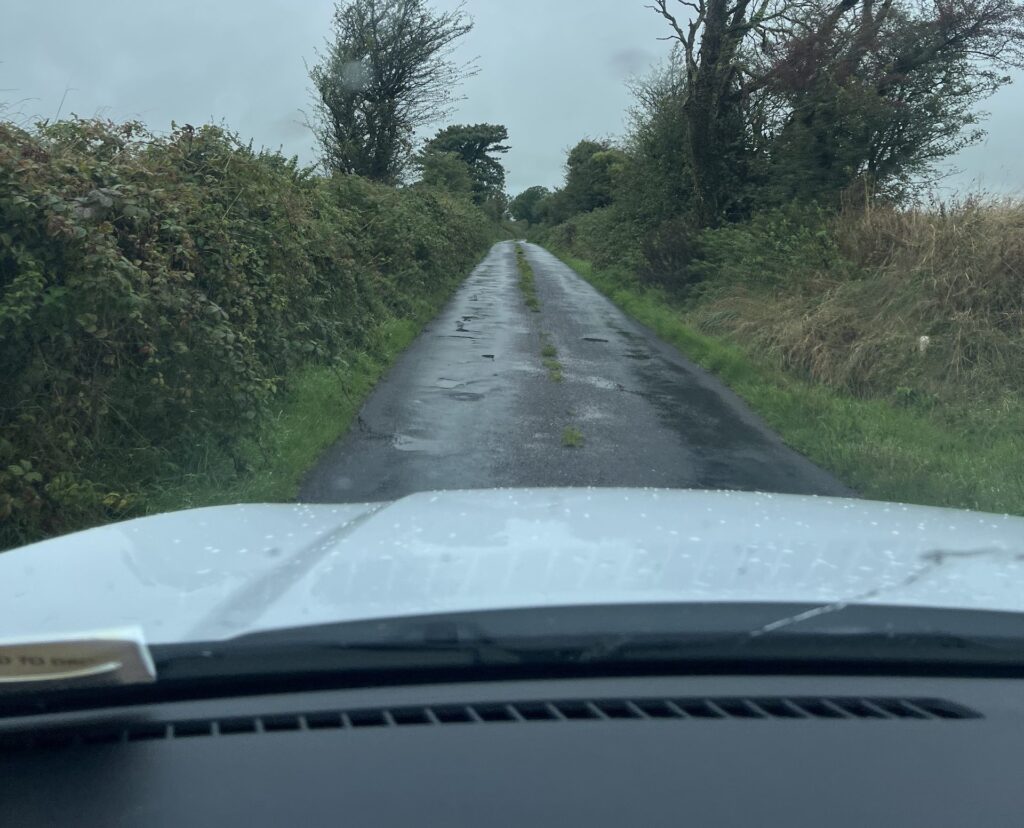
- I once had a co-worker correctly point out that every pizza is a personal pan pizza if you set your mind to it. The same can be said of the roads in Ireland: every road is a two lane road if you don’t mind what the left side of your car looks like.
- Roundabouts are your friend. Especially once you understand the etiquette at some of the bigger/busier ones. Those have a second lane when you enter, where you put on your right blinker to indicate you’re not getting off at the first exit or two. (Seems counter intuitive at first, but is actually genius.)
- Pretty much everyone does the speed limit, regardless of the road. And if you get stuck behind a large vehicle, they’ll frequently pull onto the shoulder to let you pass (when the road allows). We found slower car drivers often did the same, including completely pulling off the road to let a handful of cars pass.
- The service areas on the motorways put American rest stops to absolute shame. They are spotless and actually make you want to stop there (instead of fleeing as quickly as possible).
- We only stopped for petrol three times, but at two of them (including the rest stop with a dozen or so pumps) we paid AFTER filling up. At a rural filling station, I walked in and here’s basically how the conversation went:
- Me: I assume we have to pay ahead of time.
- The attendant: Nope. You just come in and pay afterwards.
- Me: …[stunned]…That would never work in the States.
- The attendant: I don’t suppose it would.
- I think we maybe heard three car horns the entire time I was behind the wheel, and two of those were when I drifted a little too far to the left for a taxi’s liking. That’s not an exaggeration whatsoever.
- The more numbers in the road, the more it resembles a roller coaster:
- M# – motorways. Akin to our highway system, only with better rest stops (see above).
- N## – generally 1-2 lanes and well-maintained with a shoulder.
- R### – *mostly* narrow two-lane roads with a white dividing line and an occasional shoulder. Can get a little dicey depending on the location and the size of the tour bus coming the opposite direction.
- L####/# – all bets are off here. No lines, grass growing in the middle of the road, often boxed in by hedgerows. Good luck if there’s an ongoing vehicle. Enjoy!
- Having a good copilot is important. We intentionally didn’t have a car in Dublin, because it’s the one city in Ireland with decent public transportation (other than to the airport). The rest of the time, it was great having an extra pair of eyes to look out for the next navigational marker, and to occasionally remind you that everyone else is driving on the other side of the road.
- You’ll notice a fair amount of “L” and “N” placards on the front and back windshields of cars. The former denotes a learner’s permit and the latter a novice, which must stay on for the first two years after receiving a license. A bit of a scarlet letter, but good to know nonetheless.
- There are volumes written about rental car insurance in Ireland, so I’m not going to get into too much detail. Just get one of the handful of credit cards that offer full coverage (we opted for the Chase Sapphire Preferred) and cross that worry off your list.
- Lastly, if you live in a state that offers a mobile driver’s license, take advantage of it immediately. Not only are they accepted at TSA checkpoints, you can also rent a car in a foreign country if, say, you forget your wallet when traveling to said country.
Leave a Reply